Aaryaman Patel
A lot has happened in the past year. A LOT.
New projects, spontaneous adventures, crazy events, new movies, and personal experiments, with a period of turmoil.
But the biggest and most recent update is that I graduated from college! 🎓
Honestly, it doesn’t feel much different.
I don’t think I have fully processed it yet. Neither do I know how it’s supposed to feel because it still feels the same to me.
While I get that graduation is a big event for many people, I personally haven’t felt the sense of pride or happiness from this achievement that I usually get when I create new things or work on any useful project.
I had higher expectations for the institution and for myself. And I do not think I have done anything very important or hard to celebrate just yet.
Maybe I am being my own worst critic, but I have a slightly higher bar set for myself.
However, that is not to say that I am not extremely grateful for it all.
I would have never met the people that I did or started the projects that I did if I weren’t here. My life would have looked very different today if I hadn’t been here, and for that I am eternally grateful to my family and friends.
One of the things I would like to do is sit down and think about everything I have learned, all the mistakes I have made, all the things I have tried, all the times I have been fortunate, and the people I have met during the last 4 years.
It feels like my work here is still not done. There are still so many things that I want to work on and create on this campus. So many people to meet and conversations to be had, but I know that there will never be enough time for it all.
It is bittersweet thinking about all the good things that I will be leaving behind, but also extremely exciting because I get to choose what I do next.
Something that comes free with your diploma is the dreadful question, “What’s next?”
I am not good at choosing. If you were to ask me what I wanted to do for the rest of my life, “Make movies” or “Be an engineer”, I could not give you an answer because in my mind they’re the same thing.
I have never seen my interests as being separate because it is their combination that has allowed me to create the things that I do.
I will never be the world’s best coder or filmmaker or engineer or artist. But, what I can be is the most qualified coder-filmmaker-engineer-artist in the world.
So, what am I looking for?
An intersection of all my interests and strengths that allows me to create things that add value to the lives of those around me.
My quest for this ‘Holy Grail’ only continues from here.
—Aaryaman Patel, Sign of the Times
Graduation is amazing—for the parents, for the photos, for the ceremony that says we “made it.”
But for Aaryaman, it felt hollow. He pursues a different kind of feeling: the click in your chest when something you’ve made finally comes alive. Click. That’s reality. That’s joy.
I met Aaryaman freshman year in ISR, our residence hall. It was the early days of COVID restrictions lifting. ISR had just reopened its dining seating for the first time, and we ran into each other, grabbed a spot, and ate dinner together. Somehow, that turned into one of the most cherished friendships of my life. The specifics of that first dinner are fuzzy. The feeling isn't. He cared. About climate. About using engineering as a tool rather than a title. About people. He radiated this quiet competence. While most people were getting chewed up by Calculus 3, you'd hear whispers: "Yeah, but Aaryaman got 103% and I don't even think he studied."
He was born in India, but America slipped on him like a suit he’d been measured for long ago.
Because of how he sees the world and himself.
Most people pick a lane: engineering or business or art or science. The American move is different: go wide, combine disciplines, and push back, hard, against anything that tries to cage the mind.
That ideal traces back to the founding of the nation. Washington was a great leader. But Jefferson’s greatness was something else. He wasn’t only a statesman. He was a maker-thinker-artist. He was someone who wrote, experimented, designed, and argued for a country where the mind stays free. His life reads like a standing declaration that no one gets to run your inner life. That, to me, is the deepest symbol of the American Revolution.
The same Jeffersonian spirit—independence, breadth, and a relentless drive to create across every medium—is still alive in our time. You can see it in the way Aaryaman lives.
He broke free from traditional expectations. He mastered mechanical engineering, keeping a nearly perfect 4.0 GPA, taught himself programming, and led the Illini Solar Car team’s mechanical division. At the same time, he made films, memorized every Coldplay song on the piano, co-started The UIUC Talkshow, and poured himself into painting, writing, and designing projects.
He refused the box of a single discipline and instead became a universal soul, chasing truth across domains and giving it form in the world.
I have sworn ... eternal hostility against every form of tyranny over the mind of man.
—Thomas Jefferson
There were costs. He came from a culture where everyone has an opinion about your life, and those opinions are loud. Expectations trail you like shadows. America gave him elbow room, and that room is messy. He had to learn to disappoint the script in order to honor his instincts. He learned independence the hard way: saying no to good opportunities so he could say hell yes to the right ones.
What’s most unique about Aaryaman is that he thinks with his heart. He doesn’t worship ideas, he builds them until they either stand or break. He’ll take a camera, a CAD file, a keyboard, a deadline, and somehow braid them into a creation that breathes. The result is careful, well-designed, and unmistakably his. He’s calm when others are frantic and relentless when others are bored. He’ll carry the weight and still make the room lighter.
People look at students like him and ask the wrong question: “So…what are you?” Engineer? Filmmaker? Coder? Artist? He answers by creating. The correct question is “What problem are you solving?” and his answer is usually “Whichever one is right in front of us—and I’m going to solve it with everything I am.”
Aaryaman says he’s hunting for the “Holy Grail”—the intersection where his strengths align and what he creates directly improves someone’s life. Personally, I think he’s already holding it.
The grail isn’t a job title or a company name.
It’s a way of moving through the world: independent, cinematic, and fully alive.
Things You Can Learn from Aaryaman:
- Think for yourself and break free from expectations. Traditions can hold you back if they no longer serve you. Dare to challenge norms and create your own path.
- Treat your life like a masterpiece. Constantly explore, experiment, and create. Every skill or interest you develop adds color and depth to your personal canvas.
- Don’t chase shallow achievements; pursue meaningful projects. Achievements that resonate deeply, like projects you truly care about, will always bring more fulfillment than external validation.
- Be independent, but stay grateful for those who helped you get there. True growth comes from finding your own voice while never forgetting the people who shaped your journey.
- Combine your passions instead of choosing between them. You don’t have to be the best at one thing; become uniquely valuable by bringing together engineering, art, filmmaking, music, whatever you love.
Learn more
- Aaryaman Patel’s Website
- Aaryaman Patel’s YouTube
- Aaryaman Patel’s LinkedIn
- Aaryaman Patel’s X
- Aaryaman Patel’s Instagram
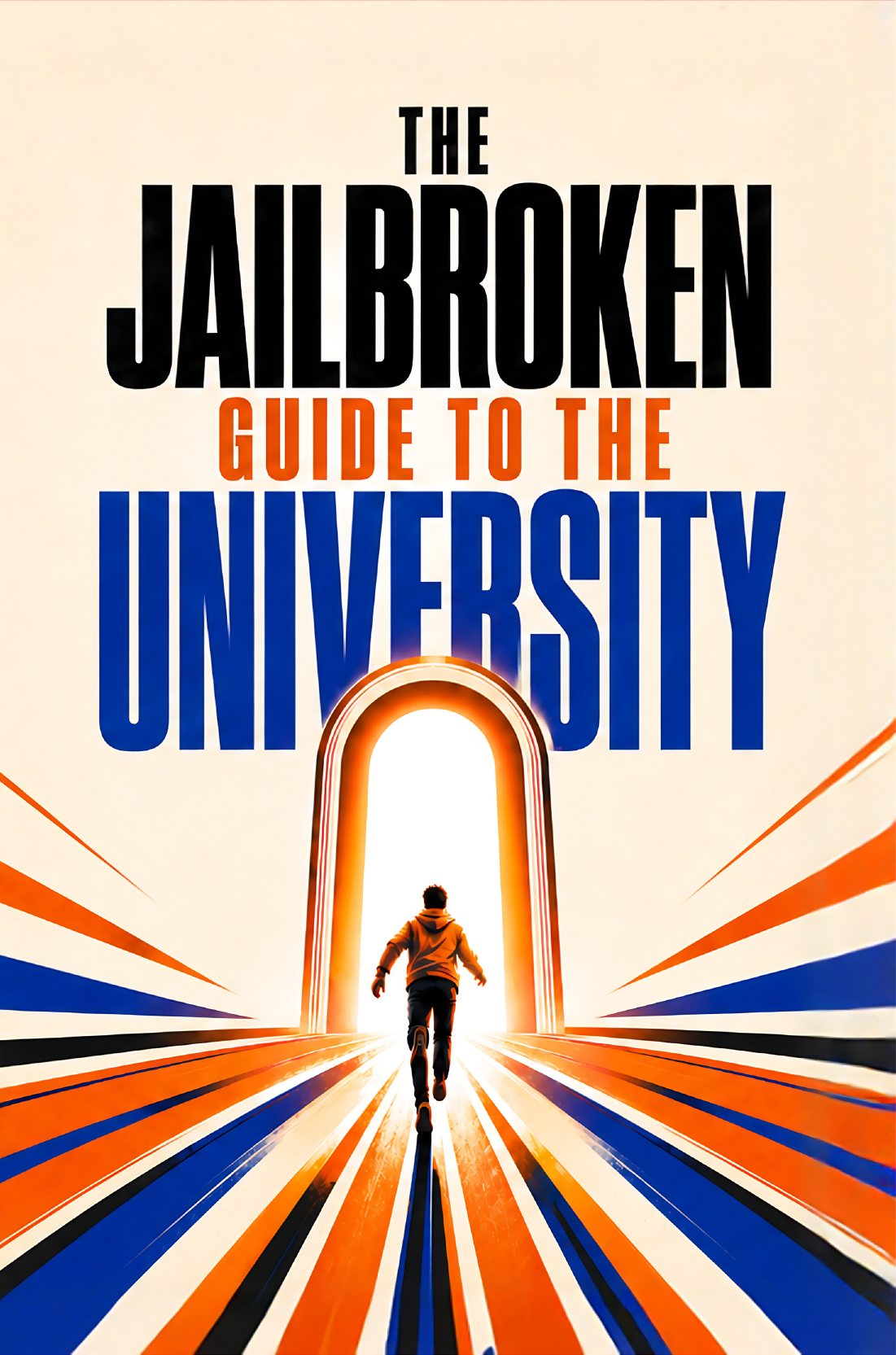
The appendix keeps the examples, guides, profiles, and source trails close. The book gives them sequence, context, and a way to turn curiosity into action.