Michael Krasny
I only met Michael Krasny once, but that was enough for me to know he was legit.
It's November 18th, 2022. Cold midwest winter, the kind that makes you pull your jacket tight as you walk across campus. It's Friday before Thanksgiving break—everyone's mentally checked out, bags half-packed, already tasting turkey and freedom. The campus has that hollow Friday energy, like a theater after the last show.
But there's this talk happening. Michael Krasny. Probably some business success story, I thought.
I'm always hunting for interesting events and people across campus, so when I spot it on the calendar, something clicks. That looks interesting. So I go.
I walk into what looks like a corporate wet dream. Business students packed in tight, all power poses and practiced networking smiles. Or at least, that’s what you would think. In reality, everyone's wearing pajama pants, leggings, and hoodies. But they're here. Probably dragged by extra credit requirements or some professor who made attendance mandatory. Can't have an empty room when the big donors show up, the bureaucrats are religious about that kind of theater.
And there in the front row, right where you would expect him to be, sits Larry Gies himself.
Larry fucking Gies.
The man who wrote a $150 million check so big they had to rename the entire college after him. His name is carved into the building, splashed across every brochure and banner, embedded in the DNA of this place.
The talk was interesting, especially Michael Krasny’s life story. One of the highlights was how he talked his way into being accepted at UIUC after initially being rejected. He also shared how he founded his company, CDW, which he eventually sold after growing it into a major success. It was really inspiring to hear. I even asked a question.
As the talk winds down, Larry Gies leans forward with that donor confidence and smile.
"One last question," he says.
"If you were able to go back to your 1975 college self—you could go back in time, sit in front of 1975 college Michael Krasny—what's one piece of advice you would have given yourself back then, knowing what you know now?"
It's the softball of all softballs. The kind of question designed to generate inspirational quotes for LinkedIn posts and donor newsletters. Follow your dreams. Work hard. Believe in yourself. The usual motivational playlist.
Michael Krasny takes a deep breath. You can see the gears turning behind his eyes.
One second.
Two seconds.
The silence stretches like a wire about to snap. Something's happening here. This isn't the pause of someone gathering inspirational thoughts. This is the pause of someone making a choice.
"Uhmmm..." Krasny looks directly at Larry Gies, and there's something in that look—a smile, maybe a smirk. He glances down for a heartbeat, then back up.
"It's not good for Gies."
The words hang in the air like smoke from a blown fuse.
"Let's... let's hear it," Gies says.
Michael Krasny looks up, past Gies, straight into the audience of business students. His voice is clear, unflinching:
Transfer to computer science or engineering.
The room explodes.
Students lose their minds. Nervous laughter, shocked gasps, the kind of chaos that happens when someone says what everyone's thinking but no one dares to voice.
Gies laughs, claps, because what else do you do? Then he pivots, changes the subject, and wraps it up.
That's when I knew Michael Krasny was legit. He was honest. He wasn't going to bullshit himself, the audience, or the guy who literally owned the room.
Right there, in front of the donor, in front of the business students, in the heart of the business school itself, he told the truth as he saw it.
I will always respect him for that.
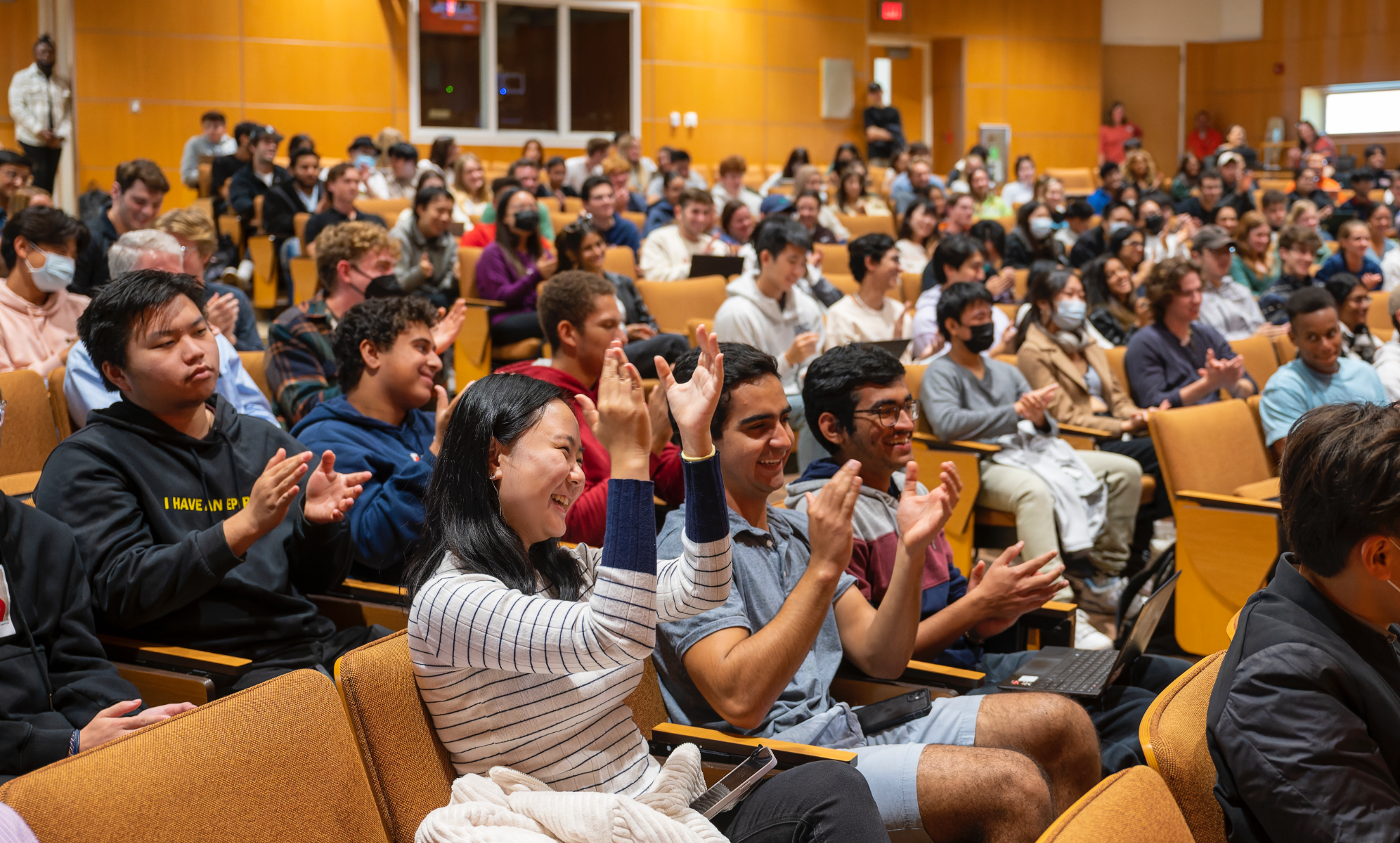
I was enraptured. Look at my face, look at my happiness. That day, Michael Krasny made the world a better place.
Learn more
- UIUC Billionaire Tells Business Students (in front of Larry Gies) To Switch to Engineering
- Michael Krasny’s Wikipedia
- V. Dale Cozad Lecture on Entrepreneurship
- This is the entire lecture
The appendix keeps the examples, guides, profiles, and source trails close. The book gives them sequence, context, and a way to turn curiosity into action.