Cory Levy
How do most entrepreneurs drop out of college?
For some, it’s the slow accumulation of academic fatigue—long lectures that feel disconnected from their goals and the creeping sense that their time could be better spent working on a product or company. For others, it happens after months of juggling classes and side hustles, until a startup gains enough traction to demand full-time attention—or they get that golden ticket into a startup accelerator.
But for Cory Levy, dropping out started with something a bit more casual: a tweet complaining about the bitter cold at UIUC. Shortly after, he ‘stopped out,’ and the rest is history.
Cory grew up in Houston, Texas—about as far as you can get from Silicon Valley and the tech scene. Even as a teenager, he knew exactly what he wanted: to work at the cool tech companies of his time like Facebook or Twitter. Unsurprisingly, they weren’t interested in hiring a teenager.
But Cory quickly figured something out: all tech startups are backed by venture capitalists. So at just 14 or 15 years old, he started cold-calling and cold-emailing venture capitalists instead. Initially, they were skeptical. What value could a teenager provide?
Then Cory came up with a compelling pitch: "You invest in tech startups aimed at teenagers, but you don’t have any teenagers on your team."
That pitch worked.
Major venture capital firms like Founders Fund, Union Square Ventures, and TechStars opened their doors to him. TechStars was the first opportunity he got.
But at 15, Cory faced another challenge: convincing his protective parents to let him travel far from home for internships.
Landing these internships turned out to be easier than getting parental approval.
He had secured an unpaid internship at TechStars in Boulder, but soon realized he didn't have the money to pay for a hotel or temporary apartment.
Determined to find a solution, Cory reached out to the clergy of a local synagogue, shared his story, and asked if any Boulder-area families might be willing to host him. To his surprise and relief, they agreed, making the internship feasible. The arrangement addressed both his parents’ concerns and the cost barrier.
At one of these internships, Cory heard about the University of Illinois at Urbana-Champaign. He noticed that many Silicon Valley people had attended UIUC. Inspired, Cory enrolled at Illinois, deliberately choosing Computer Science because he believed he should pick something challenging, especially since those subjects would be much tougher to learn after leaving school.
Fast forward to his freshman year, while studying for finals, snowed-in and frustrated by the cold Illinois winter, Cory tweeted his annoyance.
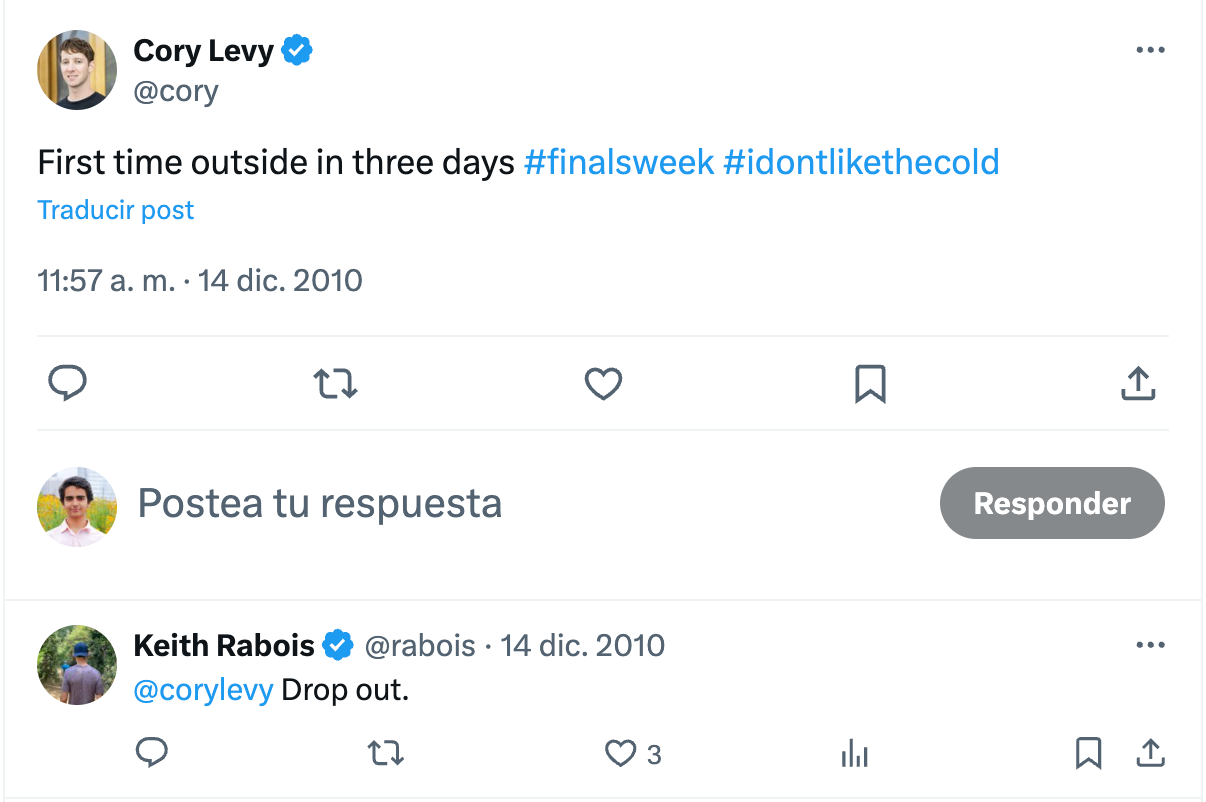
Just two hours later, Keith Rabois responded, offering to invest in Cory’s startup.
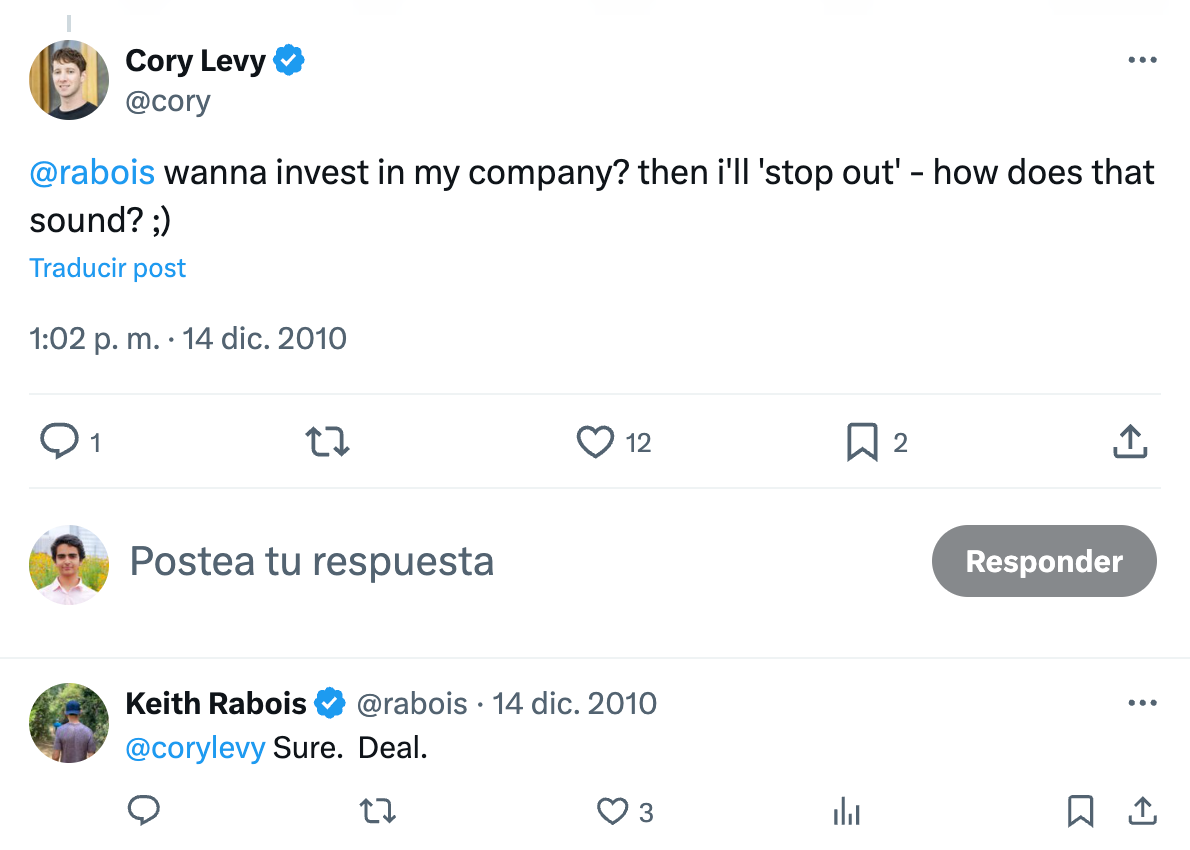
By age 19, Cory had raised over a million dollars from investors like Keith Rabois.
Interestingly, Cory never preached "drop out now" as a universal rule. Instead, he viewed it as "stopping out," with the option to return if things did not work. Even today, he advises students to stay in school unless the opportunity is truly big enough.
Cory’s journey since has been pretty cool. He co-founded After School, a teen-focused social network that reportedly reached over 20 million users and raised $18 million in venture capital before being acquired by Ancestry.com. He also became an early investor in creators like Jake Paul.
Today, Cory continues doing interesting things. He created First Text, a platform that allows founders to directly text him and connect with venture capital mentors.
Most recently, he launched Z Fellows, an offshoot of First Text that offers selected founders a $10,000 grant and a one-week break to explore their business ideas without leaving school or quitting their jobs. The program pairs participants with entrepreneurs and mentors who have founded billion-dollar companies.
From a single tweet complaining about freezing cold Illinois winters to investing in the next generation of founders, Cory Levy shows us that the most interesting paths often start in the weirdest ways.
Whether it was cold-calling venture capitalists as a teenager, negotiating free housing with strangers to make his unpaid internship possible, or turning a casual tweet into a life-changing opportunity, Cory always acted first and figured it out along the way.
Will you stop rehearsing and start doing?
Badass Moment: Dropping Condoms from a Drone on School Property
For one of his companies, the After School app, Cory created a competition for students with an unforgettable prize. The winning school wouldn’t get some lame t-shirts or a quick shoutout. Instead, they'd get a drone flying over campus and dropping After School–branded condoms.
Condoms raining from the sky.
The stunt acted as a prank and a marketing tactic.
Cory was operating on a simple observation: controversy draws attention, and attention can translate into curiosity and downloads. Those downloads became users, and those users, well, they couldn't stop talking.
Cory knew exactly what he was doing.
One thing he realized early on is that attention itself is like money. It's a currency. Attention brings users, users drive growth, growth builds momentum, and momentum creates unstoppable companies.
In this case, he generated buzz with a drone and branded condoms.
Do Cool Shit. It’s Ok—People Forget.
Before ChatGPT existed, I created a controversial website called FuckGenEds.com.
Most General Education (GenEd) courses suck ass. They waste your time, you learn nothing useful, and they drain your energy. So, why not use AI to do the tedious assignments for you?
I hesitated to release it, because at the time, professors and the university would have freaked out. I could imagine the angry emails, the disciplinary hearings, the awkward conversations, and the list goes on.
I remembered the condom story, so I had a call with Cory Levy and asked him directly, "How should I think about releasing this, and everything that comes with it?"
He said, "Look—people forget easily. You think everyone will remember your controversial thing forever, but they won’t. People move on, life moves fast, and no one actually cares that much. If it fails or backfires, it won’t define you. It might feel huge right now, but it's really not."
That reframed how I thought about it. Just create cool things. Don't be paralyzed worrying about what people might think, because chances are, they'll forget anyway.
It’s OK. Do cool shit. People will forget.
In Case You’re Curious: What happened to FuckGenEds.com? Well, ChatGPT came out a few days later and, of course, it was better than mine. But it was still fun creating a ChatGPT-like website before ChatGPT even existed.
Advice to Young People
Always act like a freshman. Don't forget your beginner's mind.
Think back to your first week of college. Everyone is new, curious, and excited to meet each other. You say hi to random people. You ask questions. You’re open to learning everyone’s story.
But then, for some reason, after that first week or two, everyone stops. People start acting "cool," even though they are not. They close and stop being curious.
Cory’s advice is to never stop being that curious freshman. Always be meeting new people. Always ask questions. Always be genuinely interested in their stories. College is like an airport, you’re randomly brought together with so many different types of people you would never otherwise meet. Learn from them! Take advantage of it. You may never have another opportunity like this again.
Act like a freshman!
Work with Local Businesses: Mia Za’s
I first met Cory at the 1517 Fund Summit in San Diego. On the bus ride back, he happened to sit next to me, and we started talking. I soon learned he had gone to UIUC. Pretty quickly, we realized we both knew Bruce Hink, the owner of Mia Za’s, a pizza place on campus.
Cory told me a really cool story about some experiments he’d run at Mia Za’s back when he was at UIUC. It turns out that Cory and his co-founder, Michael, had a close partnership with Bruce who encouraged them to test out new technologies directly in his restaurant.
One idea Cory and Michael had was to create a "smart restaurant" experience, where the restaurant itself would detect who was there and customize the environment. They started with music. Customers could create a profile in an app Cory built or text a phone number displayed on the wall with their music preferences. The system would aggregate responses and play the most popular choice. If most people liked Taylor Swift, Taylor Swift played. It was essentially a crowdsourced jukebox.
Bruce gave them complete freedom to experiment. They tried all sorts of ideas, like handing out free desserts to customers who texted song requests and experimenting with personalized artwork. At one point, Bruce asked, “Hey, can we replace all the artwork in the restaurant with screens, and then dynamically show art that matches the tastes of whoever is here?” Cory built it, and Mia Za’s filled with screens displaying rotating, personalized art.
How did Cory initially form this collaboration?
Well, he and Michael just walked into Mia Za’s one day and pitched the idea directly. Michael had created a similar concept earlier for a friend’s wedding, where guests could text in song requests to the DJ remotely. When Cory asked friends at Mia Za’s if they liked that idea, everyone was enthusiastic. So Cory immediately went downstairs, pitched it directly to Bruce, and Bruce agreed to let them try it.
Years later, in my final semester at UIUC, I ended up working closely with Bruce myself, doing marketing and social media for Mia Za’s. Before graduating, Cory happened to be on campus, so I brought Bruce and Cory back together for a chat; it was a cool full-circle moment.
The big takeaway from Cory’s story is this: working with local businesses is an incredible opportunity, yet very underrated.
What feels obvious to you—technology, social media, and how young people behave—is not obvious to local business owners, and those insights can be extremely valuable to them.
All it takes is a little creativity and a willingness to jump in and be useful.
Jailbroken Hack
Cory discovered a hack early in his entrepreneurial journey:
Ask for money, get advice. Ask for advice, get money.
He first realized this when he started talking to venture capitalists, simply looking for advice on how to grow his company. To his surprise, people immediately wanted to invest money instead. It’s counterintuitive, but incredibly effective.
So next time you need to raise money for your startup or project, try asking for advice first. Chances are, you might end up with investors lining up to fund you.
This has actually happened to me many times, not even intentionally. When I genuinely ask for advice, the conversation often turns into support, opportunities, or even funding offers.
Fun fact: Cory’s insight on this was so catchy and powerful that it directly inspired the opening lyric of Pitbull’s song “Feel This Moment.” (Yes, seriously!)
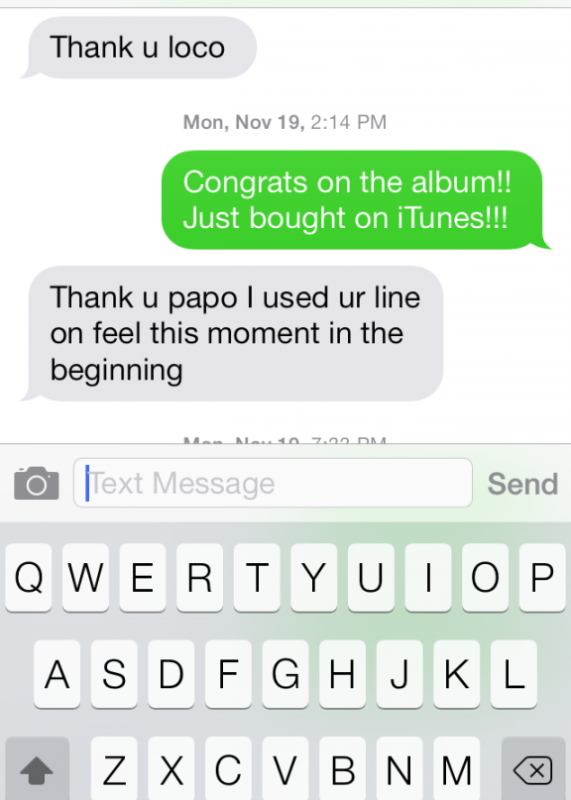
Screenshot of conversation between Pitbull and Cory.
Don't Be Afraid to Be Ambitious: Aim for the Biggest Win Possible
Cory often comes back to the same point: If you’re going to spend countless hours working on something, you might as well aim for the biggest possible win.
The owner of your favorite local restaurant probably puts in just as many hours as the founder of a billion-dollar startup. If the effort is similar, why not aim higher?
Aim higher!!!
What I Took Away
Cory’s story changed how I think about age and experience.
Being young isn’t a disadvantage; it’s actually a huge advantage.
Cory did not treat being a student as a weakness. He used it as leverage. Because he was young, people were often more willing to offer advice, take meetings, and give him room to experiment.
Above all, Cory shows what can happen when you take action now, not waiting for permission, a diploma, or someone else's validation.
Your age is an advantage, your curiosity is a superpower, and your unique perspective matters right now, exactly as you are.
Don’t wait. Start creating whatever you want to create today.
Learn more
- Cory Levy’s Website
- Cory Levy’s Phone Number: 650-505-9984
- Yes, text him with questions. He wants to hear from you!
- Cory Levy’s X
- First Text with Cory Levy Podcast
The appendix keeps the examples, guides, profiles, and source trails close. The book gives them sequence, context, and a way to turn curiosity into action.